Nigeria Builds the Future of AI: National Hackathon Showcases Youth Innovation at Scale

 Back
Back
Structure
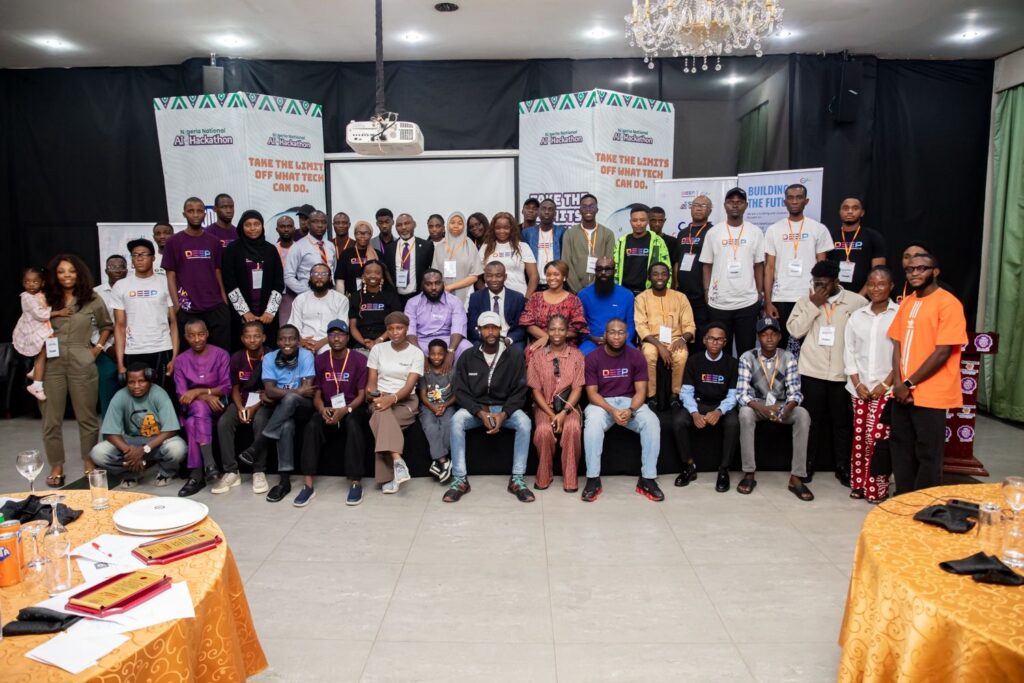
Nigeria’s next generation of AI builders took center stage at the Nigeria National Hackathon 2025, a large-scale innovation challenge that brought together hundreds of young developers, researchers, and problem-solvers to build real-world AI solutions with social impact.
Designed as a nationwide initiative and culminating in a high-energy Grand Finale in Lagos, the hackathon went beyond competition. It became a movement — connecting talent from across Nigeria around a shared mission: using artificial intelligence to solve real problems and shape the future responsibly.
The hackathon was supported as part of a broader effort to strengthen community-driven AI innovation and identify promising early-stage ideas with real-world potential. By creating an accessible entry point for young builders, the initiative aligns with the mission of DEEP Funding to support responsible, decentralized AI development through open collaboration and long-term ecosystem growth.
The hackathon engaged participants from universities and innovation communities across the country, resulting in:
Teams worked intensively across focus areas such as healthcare, education, security, and the green economy, alongside other AI-driven challenges relevant to local and global contexts.
Throughout the program, participants received structured support through mentorship, peer collaboration, and evaluation checkpoints — transforming early ideas into working solutions under real-world constraints.
Evaluation Focus and Selection Criteria
Projects were assessed through a rigorous evaluation process, with emphasis on:
Following this process, twelve standout teams advanced as finalists, recognized for the strength of their concepts, execution, and potential impact.
The 12 Finalists
Neural Eye
A portable AI-powered vision module that enables machines to detect defects, classify objects, and make autonomous decisions in real time. Demonstrated through agricultural quality inspection, the system is reprogrammable and adaptable across industrial, environmental, and research applications.
Alpha Tech
An AI-driven digital healthcare platform that connects patients and doctors through intelligent symptom triage, real-time consultations, and integrated payments, improving access to care while streamlining clinical workflows.
Sophia (First Respondent)
An AI emergency assistant that identifies life-threatening situations through voice or text and delivers real-time first-aid guidance while alerting emergency services with GPS data. Designed for low-resource environments, it includes offline functionality and multilingual support.
Killowatt
An explainable AI diagnostic agent for early detection of Chronic Kidney Disease (CKD), built on a hybrid neural model to support transparent clinical reasoning and integration with electronic health record systems.
Emerald
A lightweight AI surveillance and early-warning system that analyzes audio, motion, and visual signals to detect security threats, enabling faster response times and safer community monitoring.
Tega (HealthPredict)
A multimodal AI system for medical diagnosis and personalized treatment planning, integrating clinical records and predictive models with an emphasis on explainability and clinical trust.
Doctor Robot
An AI medical companion designed to support healthcare delivery and patient guidance, with a strong focus on accessibility through multilingual interaction.
Team JAKA (Project Renaut)
A wearable AI health companion that continuously monitors vital signs and provides conversational guidance, with a clinical decoder interface that enables rapid interpretation during emergencies.
SOAT (AutoMed)
An automated, fingerprint-secured medication dispensing device that ensures correct dosing and adherence while alerting caregivers to missed doses, reducing medication errors.
EUSATE
An AI-powered customer support platform for startups and growing businesses, automating routine inquiries with empathetic, context-aware responses and seamless human escalation.
Path Pilot
An AI-powered mobile navigation assistant for visually impaired users, using computer vision, voice guidance, and haptic feedback to enable safe and independent movement in local environments.
Keuro Lab (CogniEdufy)
An AI-powered learning platform that personalizes education through adaptive tutors while providing teachers with real-time learning analytics and institutional insights.
Final Results and Top-Performing Teams (Top 5 Showcase)
After a final evaluation phase, five teams were selected as the top-performing winners and finalists, standing out for technical execution, innovation, and clear potential for real-world impact:
Doctor Robot
An AI medical companion supporting healthcare delivery in multiple Nigerian languages, expanding access to care and improving patient support.
Team Sophia
Building smarter care systems designed to strengthen community health and enable more proactive, data-driven decision-making.
Team Eusate
An AI-powered customer support solution for businesses, supporting major Nigerian languages and Pidgin English, making digital services more inclusive.
Team SOAT
An automated AI medication dispensing system that improves accuracy, safety, and adherence for patients.
Path Pilot (Judges’ Special Award)
An AI-powered visual navigation system for the visually impaired, enhancing independence and accessibility through intelligent guidance.
From Hackathon to Long-Term Impact
The Nigeria National Hackathon 2025 was designed not as a one-off event, but as an entry point into a broader innovation ecosystem.
Finalist teams and standout projects are now positioned to:
By linking grassroots talent with global infrastructure, the hackathon reinforced a powerful message:
Nigeria is not just consuming AI — it is building it.
Copyright 2026 © Theme Created By DeepFunding, All Rights Reserved.